 Advertise with Us
 100% Cashback
 100 days ago
  6352
6352 How Biometrics and AI Are Improving Security Across Online Gaming Platforms
 Nikita Content Writer

Introduction
As online platforms continue to evolve, security and trust have become critical priorities for both operators and users. From preventing unauthorized account access to detecting fraudulent behavior, modern platforms are increasingly relying on advanced technologies such as biometric verification and artificial intelligence (AI).
These technologies are transforming how digital platforms verify identities, monitor suspicious activity, and protect users from fraud. Whether it is a gaming platform, fintech application, social network, or digital marketplace, AI and biometrics are helping create safer online environments.
Industry resources such as PokerListings regularly discuss technological developments and security trends within the online gaming ecosystem, highlighting how advanced verification systems are becoming an important part of modern platform infrastructure.
In this article, we explore how biometrics and AI are improving security, enhancing user trust, and shaping the future of digital platform protection.
Understanding Biometric Verification
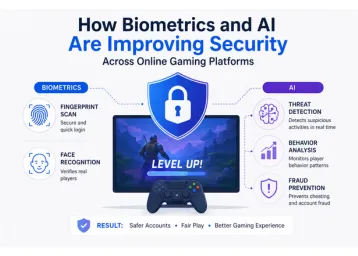
Biometric verification uses unique physical or behavioral characteristics to confirm a user's identity. Unlike passwords, which can be forgotten, shared, or stolen, biometric identifiers are significantly harder to replicate.
Today, many online platforms utilize biometric authentication to improve account security while simplifying the user experience.
Common Biometric Technologies
Facial Recognition
Facial recognition systems compare a live image with previously verified identity records. This technology is commonly used during account registration, identity verification processes, and high-security account actions.
Benefits include:
- Faster account verification
- Reduced identity fraud
- Enhanced account protection
- Improved user convenience
Fingerprint Authentication
Fingerprint verification has become widely adopted on smartphones and tablets. Users can securely access their accounts using built-in fingerprint sensors without repeatedly entering passwords.
Advantages include:
- Quick authentication
- Strong account security
- Reduced password dependency
- Better mobile user experience
Voice Recognition
Voice-based authentication is increasingly used for customer support and account recovery processes. Advanced systems can identify unique vocal patterns and help verify user identity during support interactions.
Key benefits include:
- Secure account recovery
- Reduced impersonation risks
- Improved customer support verification
Why Biometric Security Is Becoming Popular
The rapid growth of digital services has increased the need for stronger identity verification systems. Traditional username-and-password combinations are often vulnerable to phishing attacks, credential theft, and unauthorized access.
Biometric verification addresses many of these challenges by providing:
- Stronger identity assurance
- Faster authentication
- Better fraud prevention
- Improved user convenience
- Reduced reliance on passwords
As cyber threats continue to evolve, biometric security is expected to play an increasingly important role across various industries.
The Growing Role of Artificial Intelligence in Fraud Detection
While biometrics helps verify who a user is, artificial intelligence helps determine whether their behavior appears legitimate.
Modern AI systems continuously analyze user activity and can identify unusual patterns that may indicate fraud, abuse, or security threats.
Rather than relying solely on fixed rules, AI systems learn from large amounts of data and adapt to new attack methods over time.
How AI Detects Suspicious Activity
AI-powered monitoring systems can analyze:
- Login behavior
- Device usage patterns
- Transaction activity
- Session duration
- Geographic access locations
- Unusual account behavior
By identifying deviations from normal activity, platforms can respond to potential threats much faster than traditional manual review processes.
Real-Time Monitoring
One of the biggest advantages of AI-driven security systems is real-time analysis.
Instead of reviewing incidents after they occur, AI can:
- Flag suspicious behavior instantly
- Trigger additional verification checks
- Restrict potentially compromised accounts
- Alert security teams automatically
This proactive approach helps reduce fraud and improve overall platform integrity.
AI and Platform Integrity
Beyond account security, AI also contributes to maintaining fairness and trust across digital platforms.
Advanced machine learning models can identify:
- Coordinated fraudulent behavior
- Automated bot activity
- Fake account networks
- Account sharing attempts
- Unusual behavioral patterns
These capabilities help operators maintain healthy digital ecosystems and improve user confidence.
As online communities continue to grow, automated monitoring systems are becoming increasingly important for detecting large-scale abuse that may be difficult for human moderators to identify manually.
Privacy Considerations in the Age of AI and Biometrics
Although AI and biometric technologies offer significant security advantages, they also raise important privacy questions.
Users increasingly want transparency regarding:
- What information is collected
- How data is stored
- Who can access the data
- How long data is retained
- Whether users can opt out
Responsible data management has therefore become a critical aspect of implementing these technologies.
Best Practices for Users
Users can take several steps to protect their privacy:
- Use trusted platforms with clear privacy policies
- Enable two-factor authentication when available
- Regularly update account passwords
- Review permissions before installing applications
- Monitor account activity periodically
- Understand how personal information is being used
A combination of strong platform security and informed user behavior provides the best protection against digital threats.
Benefits for Everyday Users
Many security improvements happen behind the scenes, but users experience several direct benefits:
Faster Access
Biometric authentication reduces the need to remember complex passwords while maintaining strong security.
Better Account Protection
AI-powered monitoring helps identify unusual activity before significant damage occurs.
Reduced Fraud Risks
Advanced detection systems make it harder for malicious actors to exploit platform vulnerabilities.
Improved Trust
When users know that strong security systems are in place, they are generally more comfortable engaging with digital services.
The Future of Online Platform Security
The adoption of AI and biometrics is expected to accelerate over the coming years.
Emerging trends include:
- More advanced facial recognition systems
- Improved voice authentication technology
- Behavioral biometrics based on user interactions
- Real-time machine learning threat detection
- Stronger identity verification frameworks
- Enhanced privacy controls for users
As digital ecosystems continue expanding, security technologies will need to evolve alongside increasingly sophisticated cyber threats.
Future systems are likely to focus on balancing three important goals:
- Strong security
- User convenience
- Privacy protection
Organizations that successfully achieve this balance will be better positioned to build trust and maintain long-term user confidence.
Conclusion
Biometric verification and artificial intelligence are rapidly becoming essential components of modern digital security. By combining accurate identity verification with intelligent fraud detection, these technologies help create safer and more trustworthy online environments.
While privacy and data protection remain important considerations, responsible implementation can deliver substantial benefits for both platforms and users.
As technology continues to advance, AI and biometrics will play an increasingly important role in protecting digital ecosystems, improving user experiences, and strengthening online security standards across industries.
Disclaimer: This article is intended for informational and educational purposes only. It discusses technology, cybersecurity, and user verification systems used by online gaming platforms. FreeKaaMaal does not endorse, promote, or operate any gambling or betting services. Users should comply with applicable laws and regulations in their jurisdiction.
About Author
Nikita
Content WriterI write to shed light on motivating, influencing and creating organic ideas. My readers will read my content for accuracy, creativity, and, last but not least, for clarity.

0 Comments
Login to Post Comment11